
Welcome to Kett - Tomorrow's Testing Today
Home » Rice Quality Measurement Instruments
Kett’s grain and rice quality instruments cover every step of the laboratory workflow, from husking, polishing, and grinding raw samples to measuring composition (moisture, protein, amylose) and grading appearance. Whether you operate a rice mill, grain elevator, export facility, or breeding program, Kett provides the instruments you need to objectively evaluate quality at every stage.
Popular grain and rice quality instruments from Kett. View all products in this category for the full lineup.
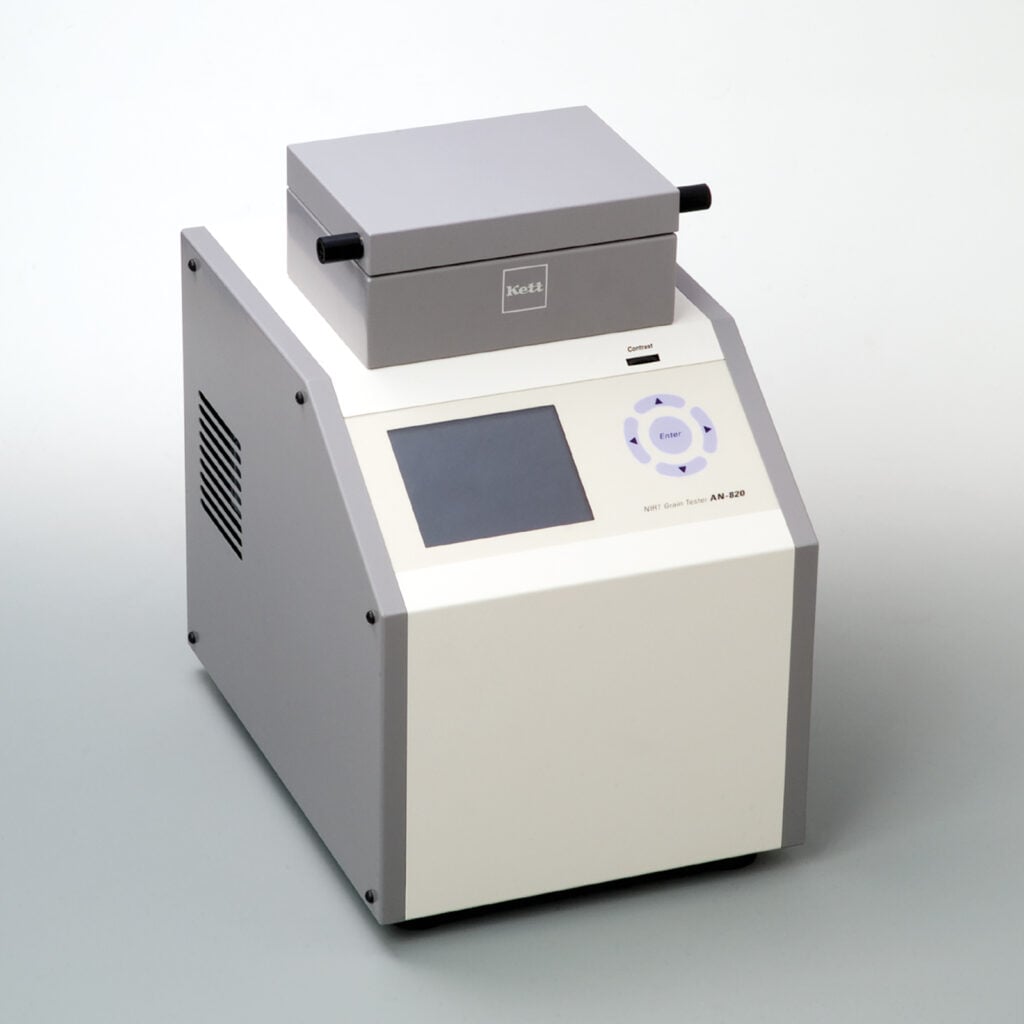
Measure moisture, protein, amylose, and fat content without grinding or destroying your sample. NIR transmittance technology analyzes intact kernels in approximately 40 seconds.
One source for every step: husking, polishing, grinding, composition analysis, and appearance grading. Reduce vendor complexity and ensure instrument compatibility across your process.
Instruments ship with pre-loaded calibrations for common grain and rice varieties, ensuring worldwide consistency for global operations. Custom calibrations are available for specialty crops and other translucent materials.
Replace subjective visual inspection with automated image processing. Classify grain by size, shape, color, and defect type with repeatable, documented results.
Kett instruments are used by government inspection agencies, export facilities, and research institutions worldwide. Standard sample validation and bias adjustment ensure traceable, audit-ready results.
From handheld grain gauges to benchtop analyzers with USB, Bluetooth, and Ethernet connectivity, Kett instruments fit your environment and integrate with your data systems.
Kett grain and rice quality instruments use near-infrared (NIR) transmittance technology to measure the composition of whole grain samples. A tungsten lamp sends NIR light through the sample, and a precision spectroscope detects the transmitted wavelengths between 600 and 1100nm. The instrument compares the absorption pattern against factory or customer-created calibration curves to calculate moisture, protein, amylose, and fat content in approximately 40 seconds.
No grinding or sample alteration is required. Fill the sample case, insert it into the instrument, and press start. The instrument automatically scans five different sections of the sample and can average up to nine repeated measurements for maximum accuracy.Each instrument ships with standard reference samples for daily validation. A built-in bias adjustment procedure (manual or automatic) ensures measurement accuracy is maintained over time, meeting the traceability requirements of government grading programs and international trade standards.
Beyond composition analysis, Kett offers instruments for every step of the grain quality workflow. Huskers and polishers prepare raw samples for testing. Grinders produce uniform flour samples for wet chemistry or baking tests. Kett also offers automated grain appearance analyzers that classify kernels by size, shape, color, and defect type using high-resolution image processing.
Grain and rice quality instruments are used wherever grain is received, processed, traded, or evaluated for compliance.
Quality testing happens at every stage of the milling process, from receiving rough paddy through husking, polishing, and final packaging. Inaccurate composition data or inconsistent grading leads to incorrect milling settings, over-polished product, reduced yield, and rejected shipments. Kett’s analyzers and graders provide the objective data millers need to optimize each stage and meet buyer specifications.
Composition testing begins at harvest, where moisture content determines whether grain is ready for drying and storage. Harvesting too early or too late affects protein levels, milling yield, and market value. Kett’s portable and benchtop analyzers help growers make informed harvest timing and drying decisions that protect crop quality from field to buyer.
Composition testing and appearance grading occur at receiving, blending, and final shipment, where contract specifications must be verified before product changes hands. Discrepancies in moisture, protein, or grade classification result in rejected loads, price adjustments, and disputes. Kett instruments give traders and exporters fast, documented results that stand up to contract verification.
Composition analysis is central to variety development programs, where researchers evaluate thousands of experimental lines for protein content, amylose levels, and other quality traits. Manual or slow testing methods create bottlenecks that limit the number of lines evaluated per season. Kett’s 40-second non-destructive analysis lets breeding programs screen more samples without sacrificing accuracy.
Official quality assessments take place at elevators, warehouses, and export terminals where grain must meet regulatory standards before it can be traded or shipped. Subjective visual grading introduces inconsistency between inspectors, locations, and shifts. Kett’s automated analyzers and image-processing graders deliver repeatable, traceable results that support standardized grading programs.
Incoming raw material testing at flour mills, cereal plants, snack manufacturers, and animal feed operations determines whether a lot meets production specifications before it enters the process. Incorrect moisture or protein readings lead to product defects, inconsistent texture, shortened shelf life, and wasted ingredients. Kett instruments verify incoming grain quality at the dock, before it becomes a costly problem downstream.
Barley and wheat quality testing happens at receiving and throughout the malting process, where protein content and moisture directly affect malt modification, extract yield, and final beer quality. Out-of-spec grain produces poor malt that cannot be corrected later in the process, resulting in lost batches and production delays. Kett’s composition analyzers help maltsters and brewers verify raw material quality before committing to production.
Routine composition analysis and sample preparation support product development, process optimization, and incoming/outgoing QC programs across industries. Without reliable, repeatable reference data, laboratories cannot validate process instruments, resolve customer complaints, or support product claims. Kett’s full range of sample preparation and analysis instruments gives laboratories the tools to generate traceable, defensible results.
Popular rice quality measurement instruments from Kett. View all products in this category for the full lineup.
The flagship in Kett’s rice composition analyzer line, designed for rice mills, trading companies, and government inspection programs that need fast, reliable quality data.
NIR transmittance technology measures moisture, protein, and amylose content on whole grain samples in approximately 40 seconds with no grinding required. A 5.7″ color touch panel and three-level user access simplify operation in multi-operator environments. Ships with factory calibrations for short brown rice and short milled rice.
Contact Kett if you need calibrations for additional grain types or other translucent materials.
Built for grain traders, export facilities, and inspection agencies that need objective, repeatable quality grading. A high-resolution 5MP camera and automated image processing classify individual kernels by size, shape, color, and defect type, replacing subjective visual inspection with documented, auditable results.
Processes and classifies samples automatically, generating detailed reports suitable for government grading programs and contract verification.
Ideal for operations that grade large volumes against government or contract specifications where consistency and traceability are required across shifts and locations.
The essential sample preparation tool for any grain quality laboratory. Polishes rice, wheat, and barley samples in approximately 30 seconds per 10-gram batch, with an automated timer for consistent, repeatable results.
Used upstream of composition analyzers and appearance graders to prepare milled samples from rough grain.
A practical, affordable addition that completes the laboratory workflow alongside Kett’s huskers and grinders.
From sample preparation to composition analysis and appearance grading, Kett’s engineers can help you select the right instruments for your workflow.